As a student in the oil painting department, I quickly noticed the differences between oil painting and watercolor when I started life drawing in my sophomore year. Firstly, the tools used are different. Watercolor painting tends to favor fan brushes, while oil painting leans more towards the use of palette knives. Secondly, there is a difference in the feeling of painting. Watercolor painting often feels more spontaneous and bold due to the longer painting time, whereas oil painting has its own unique feeling. Thirdly, there is a difference in the choice of subject matter. When painting with watercolors, the teacher usually selects subjects that are relatively easy to control. However, in college, the teachers do not limit the choice of painting subjects, so sometimes the chosen subjects are challenging to fully capture, resulting in less satisfactory outcomes.
In October of my sophomore year, we accompanied our teacher to Taihang Mountain, and later on, we spent several days painting at Bingbingbei (a place name). In the beginning, we focused on painting the waterfall near the peak of the mountain.

The choice of subject matter is crucial, and our group struggled with the selection of subjects, resulting in mediocre initial paintings. There were three main reasons for this:
Firstly, the distance was too long. It took us roughly a morning to walk from our accommodation to the waterfall, and the return journey took about one to two hours.
Secondly, we carried too many unnecessary items. We brought a lot of paints that we didn’t end up using, which added unnecessary burden.
Thirdly, our clothing was not suitable for the season. Since we were painting in the mountains, it was colder compared to the temperature forecasted. Most of the time, we were not focused on painting but rather finding ways to keep warm.
Therefore, in the later stages, I decided to buy a stainless steel cart with a bungee cord to transport my art supplies, and I aimed to minimize the paints I carried, among other things.
In October, Taihang Mountain was often shrouded in mist, and most of the mountains were surrounded by thick fog. After around 9 or 10 in the morning, the visibility became very poor. This means that if you chose the mountains as your subject, you only had one or two hours to capture the scene. As a restless student, I chose to paint the farthest peak of the mountain. However, due to the distant visual distance, I couldn’t see the peak clearly. Therefore, during this period, my artworks were mainly influenced by my mood rather than accurately depicting the appearance of the mountain peak.
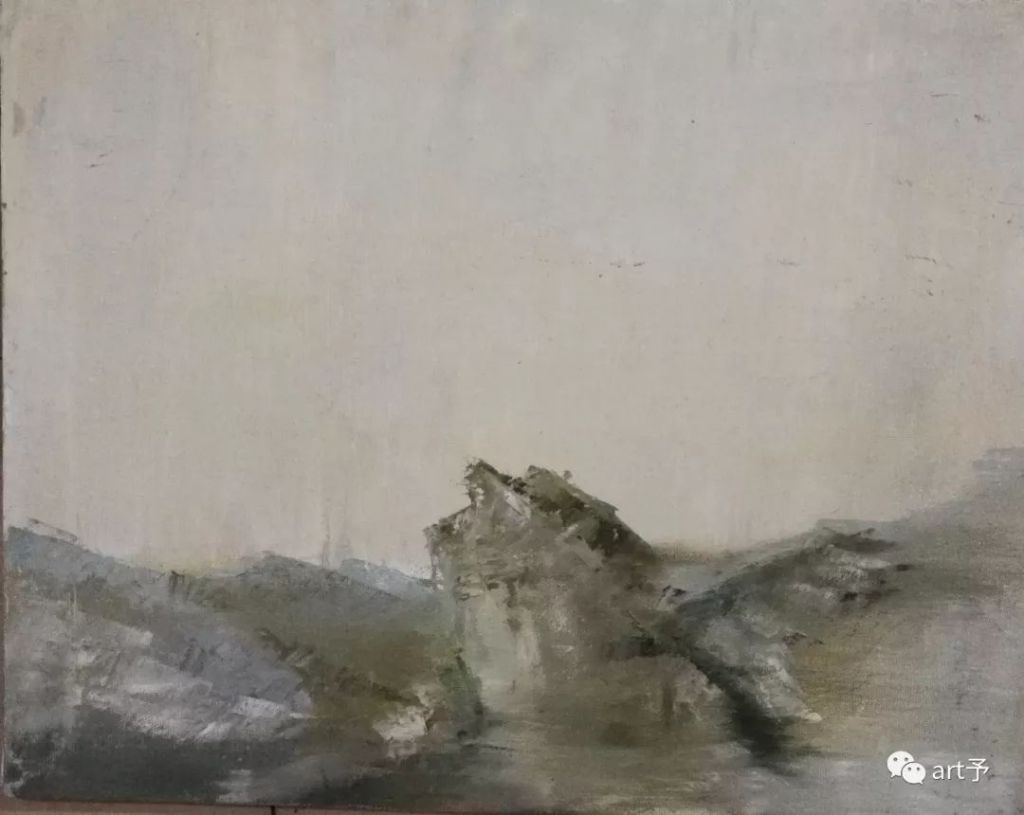
One of the artworks from the “Mountain and Mist” series, 40*50cm, an oil painting on canvas
This painting was done at the foot of Bingbingbei (a place name), with the base of the painting prepared from the previous day’s rainy weather. Due to the cold weather, I used earth yellow (Marilyn), brown (Marilyn), blue-gray (Marilyn), fast-drying white (Marilyn), and flesh color (Winsor & Newton) as the base colors. In terms of the painting technique with the palette knife, I leaned towards using a flat scraping method. In the later stages, I used a soft brush to eliminate the harsh brushstrokes and reduce the visual impact on the painting.
Regarding color, I preferred using analogous colors because I felt that the texture created by the palette knife was already quite strong. If complementary colors were used in the color palette, it would be challenging to maintain control over the overall composition.

One of the artworks from the “Mountain and Mist” series, measuring 40*50cm, an oil painting on canvas.
This painting was done by a lake. On that day, there was heavy mist, so the painting process took place within an hour (as my memory of that day only includes roasted sweet potatoes and fishing). The initial concept for this painting was different, but due to the quick movement of my painting technique and the covering mist, I later modified the original harsh brushstrokes with a fairly dry soft brush to create a sense of ethereal mist. I am aware that the different states of the brush (dry or wet, varying proportions of oil, etc.) can yield different effects.
The second plein air painting, during my junior year, took place in the Shouzhuo Garden Scenic Area, the former residence of Tao Yuanming, in Huangshan City, Anhui Province. This time, it was also in October, and compared to the mist in the Taihang Mountains, the mist in this location was relatively “shy.”

At first, I still followed the previous theme and chose a distant mountain peak as my subject (I know, it’s quite speechless). However, upon completing the painting, my initial feeling was that I hadn’t made any progress and that the foundation and objects in the composition felt disconnected. I am extremely grateful to my teacher, Mr. Yang Xiaoyang, for his explanation of my artwork, as well as a senior graduate student who helped me. Below are the creative processes of several artworks:

“Untitled (I)” 50*60CM, oil on canvas
This is the second painting I created in that place. The air there was fresh and dry, perhaps because I had been living in Xi’an and was accustomed to its smoggy days. I found the sunlight in Shouzhuo Garden to be particularly glaring, so this painting turned out relatively rigid, with minimal signs of color blending.

“Untitled (Two)” 50*60CM, oil on canvas.
This painting is the third artwork, painted on the same day as the previous one. Because I felt a bit irritated by the strong sunlight that day, the initial background of this painting was done in rust red (Marie’s), blue-gray (Marie’s), flesh tone (Winsor & Newton), and zinc white (Marie’s). However, as the afternoon approached and the weather gradually became gloomy, I added earth yellow (Marie’s) and other colors to the later stages of the painting.
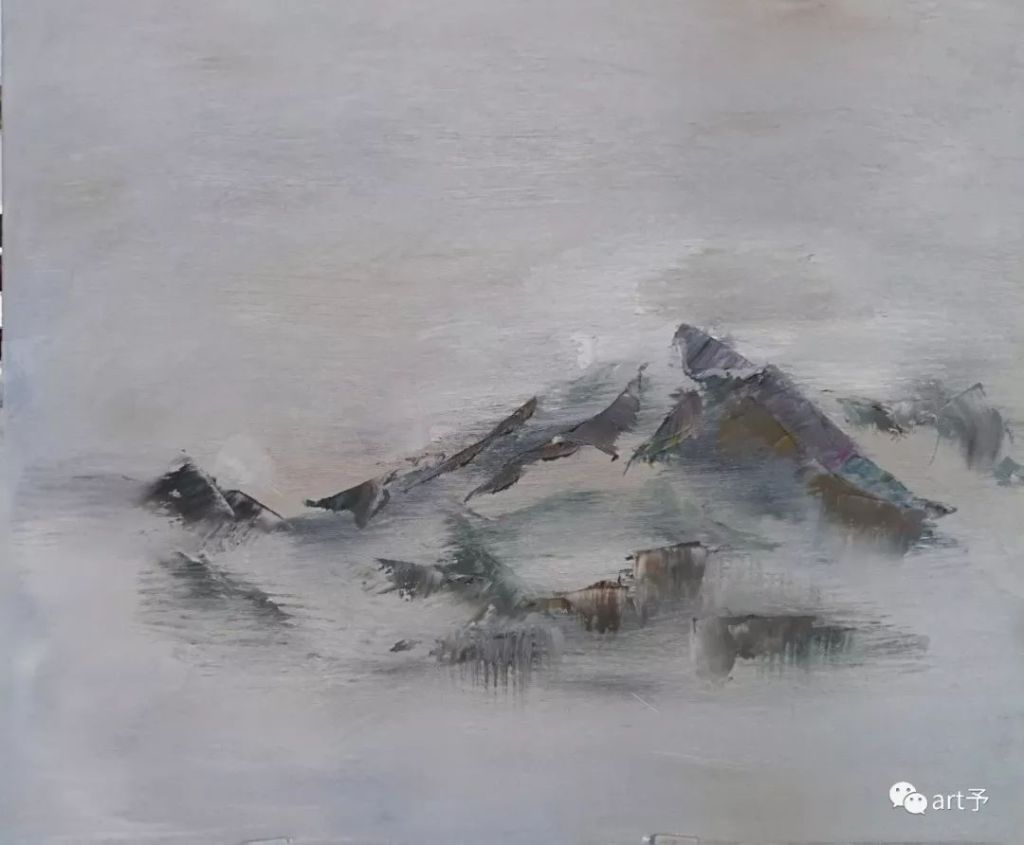
I can’t remember the exact day when I painted this artwork, but it’s evident that there is a disconnect between the background and the objects in the composition. The base of the painting is too soft, while the mountains appear too intense, giving an overall impression that is both simplistic and rigid.

50*60CM, oil on canvas
I wasn’t entirely satisfied with this painting while working on it. I felt that the blending of the mist on the mountains using a palette knife appeared somewhat stiff, and the transition of white at the foot of the mountains lacked finesse. The creation of this artwork coincided with an outdoor rainfall, and the rainwater washing over the canvas eliminated the initial stiffness, resulting in a more ethereal and hazy atmosphere.
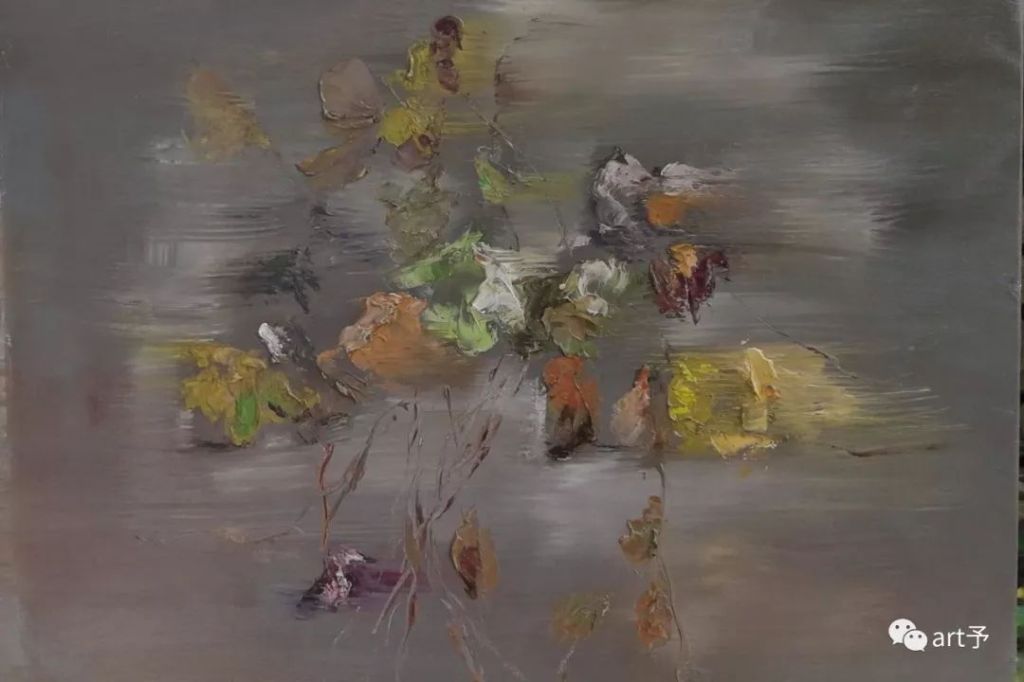
50*60CM, oil painting on canvas
This painting represents my first attempt at changing the subject matter. The reason behind the dark-colored base is that in the morning, I initially tried painting a shadowed dry grass, but I realized that I wasn’t skilled at it. So, I brushed over it with a gray base. I’m not entirely satisfied with this artwork for several reasons. Firstly, I didn’t have ideal control over the amount of oil on the soft-bristle brush, resulting in faint visible brushstrokes in the later stages of the painting. Secondly, my observation of the objects was inadequate, and I failed to capture their distinctive features. Lastly, the overall impression of the painting feels too messy or dirty.
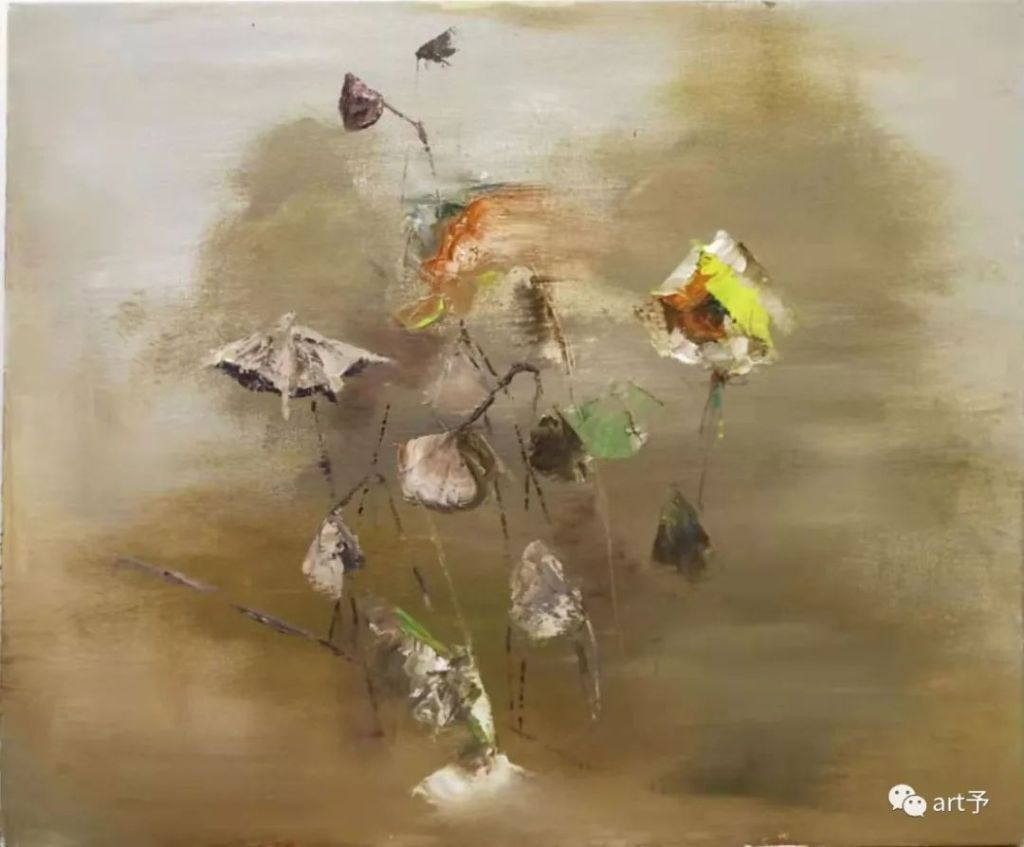
“Remainder” 50*60CM, oil on canvas

“Withered” 50*60CM, oil on canvas
“Remnant” and “Withered” are the two paintings I worked on and modified in the days leading up to my departure. The most demanding one was “Withered,” which took me three days to revise. Initially, like the other paintings, it was rigid and lacked a thorough observation of the subject. However, I couldn’t bear the thought of all my artworks being on the same level without any improvement. So, on the day before I left, I had my teacher, Mr. Yang, look at it three or four times, and I also had other teachers review it several times. To be honest, painting is simple, but modifying artwork is challenging. During this plein air session, I believed that besides the background being blurred, the objects should also be emphasized. Therefore, most of my paintings had noticeable brushstrokes. However, the substitute teacher for this class, from the first day of commenting on my artwork, emphasized the need for a sense of abstraction. It wasn’t until the later stages when I truly embraced the concept of abstraction in “Withered” that I discovered how it can better highlight the subject and enhance the overall impact of the painting. So, when I later created “Remnant,” even with just a few hasty strokes, I was able to express my ideas.

 Jiayi zhao
留下评论