“Creation” is the most frequently heard term since we entered school. It is a word that reflects our personal thoughts and individual foundations. From the beginning of drawing apples to later sketching the human body, each step is aimed at laying a solid foundation for our self-creation in the future.
From the initial stages of creation, my perspective differed from that of other classmates. Instead of using the conventional techniques of oil painting, I chose to express myself through fluid art. Many people are unfamiliar with fluid art, so allow me to present some of my experimental works to showcase its uniqueness.

Fluid art is the technique of mixing acrylic paint and silicone resin together, allowing different colors to blend and flow without mixing completely.
The first piece involves overlapping colors, allowing the paint to flow freely.
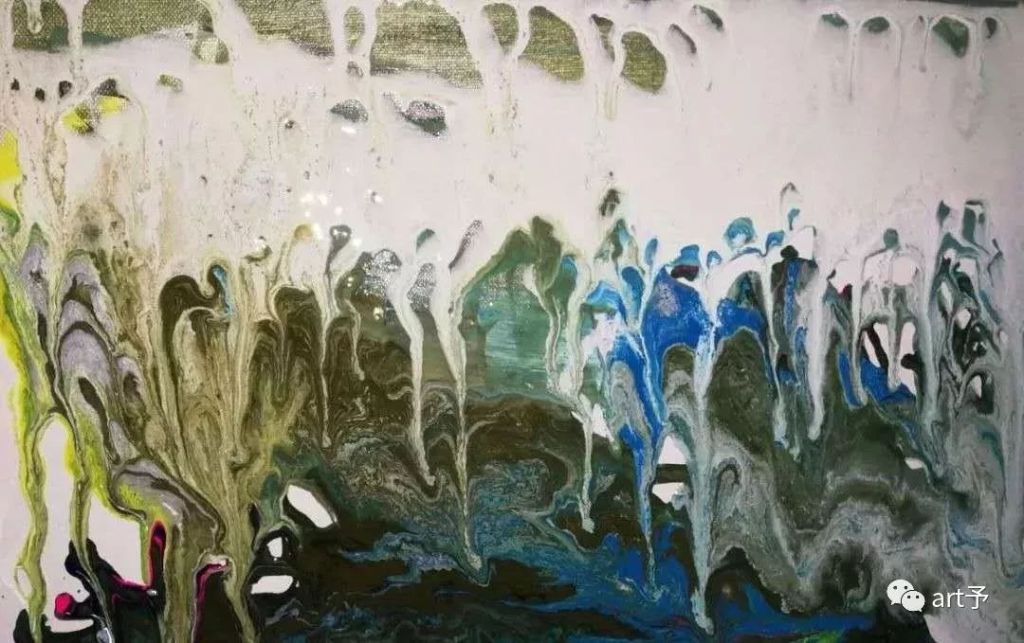
The second piece involves pouring the paint onto the canvas in layers, allowing it to flow freely. Then, a blow dryer is used to create wave-like patterns in areas with more texture.
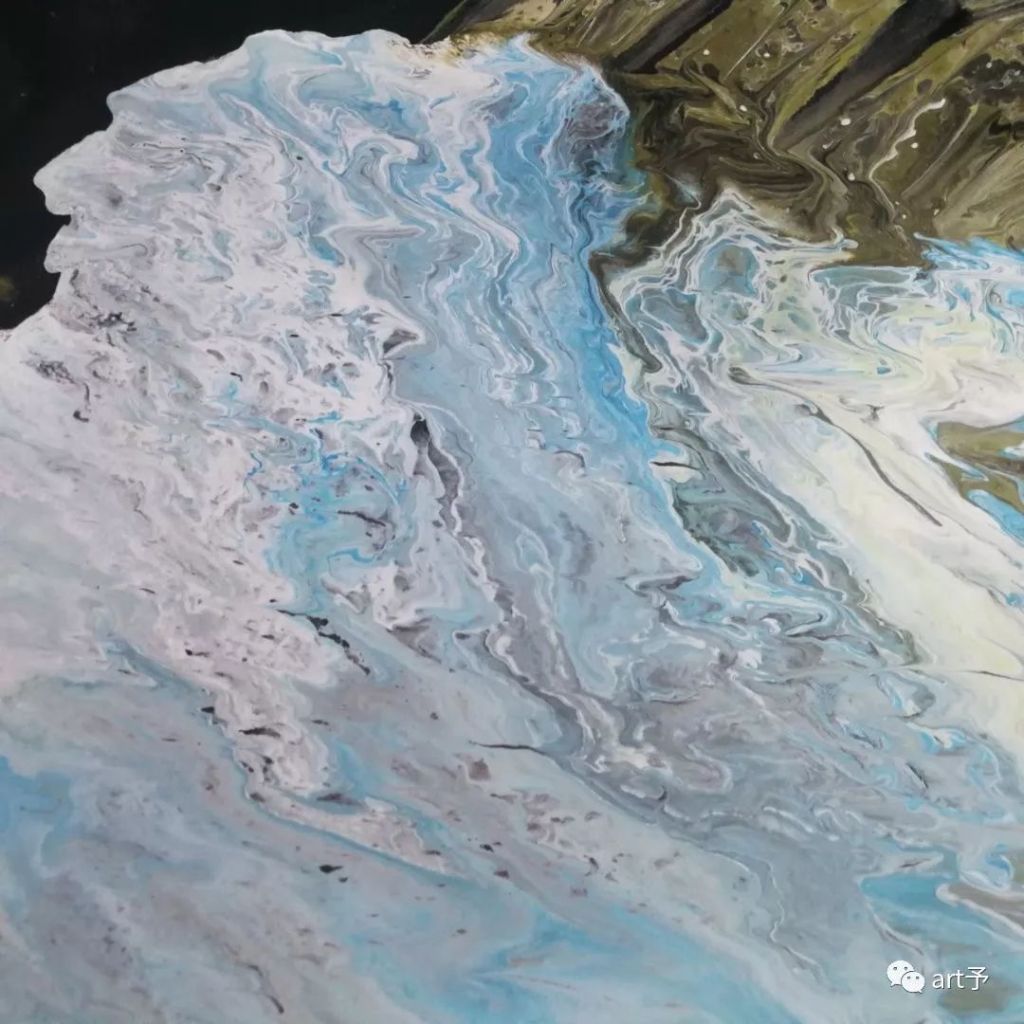
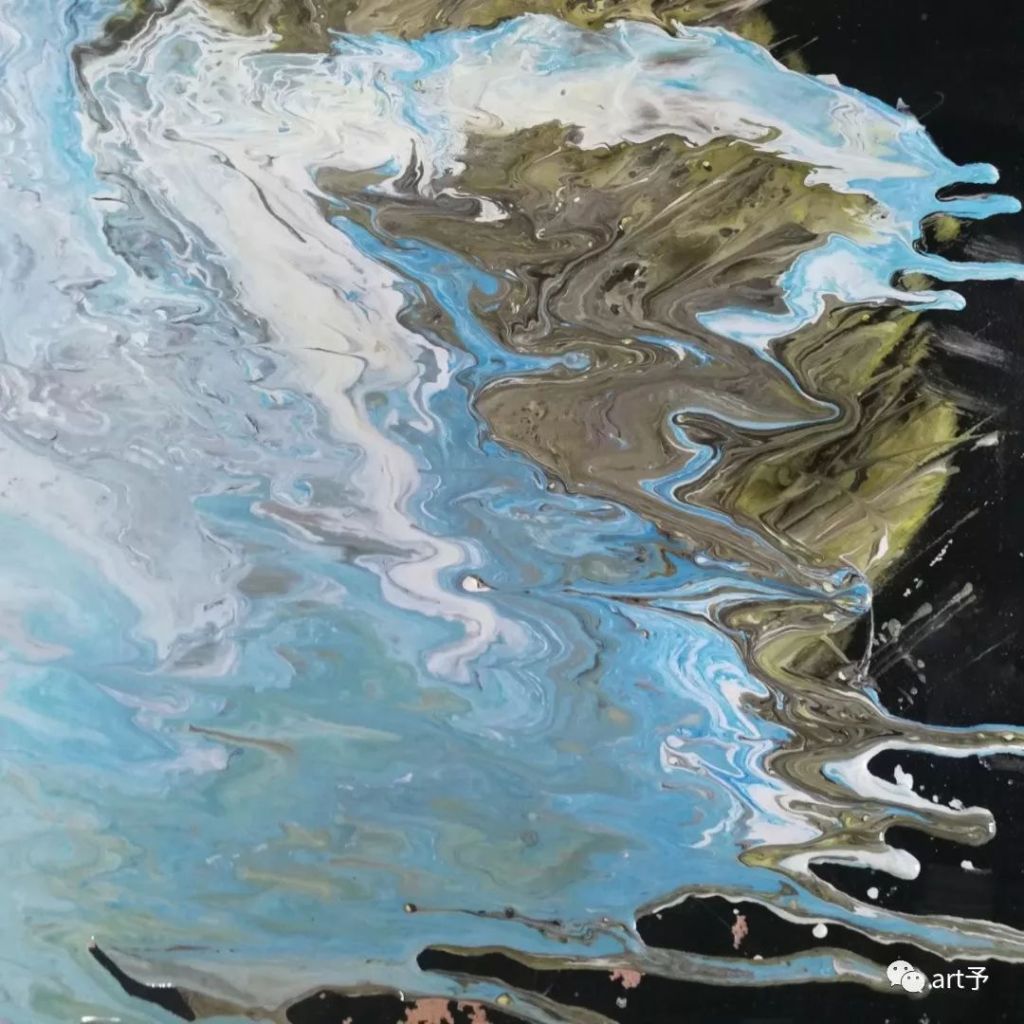
The third piece follows the principle of oil-water separation. First, a pattern is painted on the canvas using oil-based paint with a higher oil content (without filling the entire canvas). After it dries, a mixture of acrylic paint and silicone resin is poured onto the same canvas. A soft-bristle brush is then used to evenly spread the paint on the canvas, resulting in the following pattern.
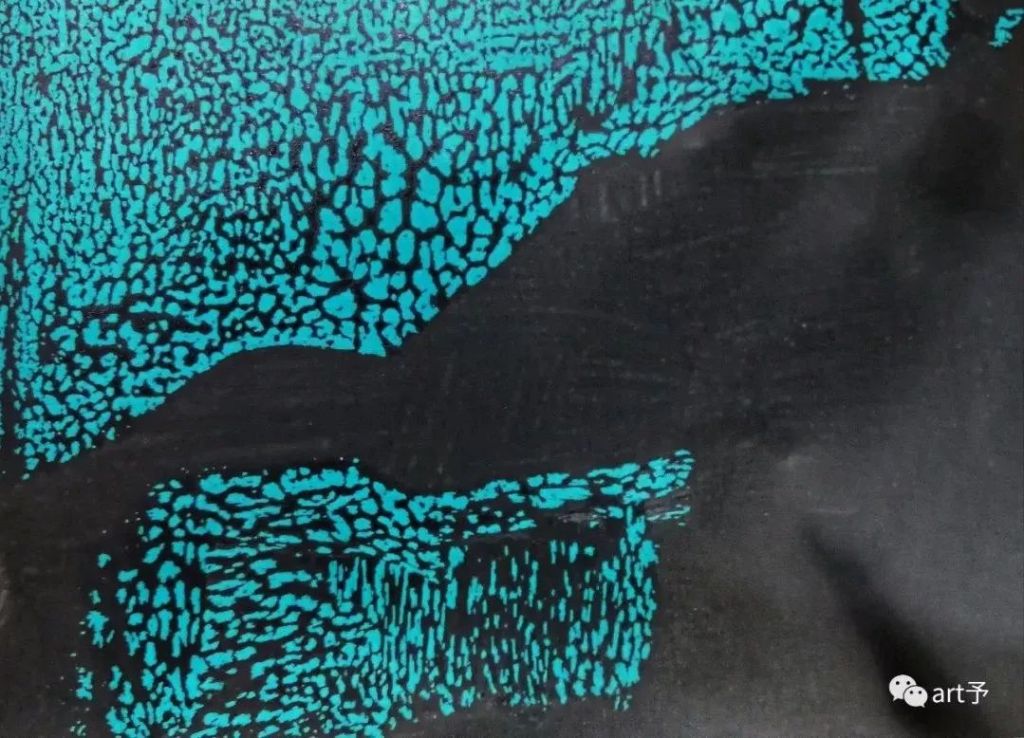
(The large black area at the bottom does not have any oil paint pigment.)
KREATNG THE BASE
Because I have always wanted to see the sea, for this artwork, I used plaster and white latex to shape the base into the form of waves. However, later on, I discovered that plaster had a strong water-absorbing ability, making it difficult to control the amount of water. Simply put, just when I finished mixing it, it would dry up. Trying to salvage it by adding water didn’t work either. Therefore, I switched to using cement. Cement can be said to be very useful, but its drawback is that it doesn’t adhere well to the canvas.
For the later stages of the base, initially, I wanted to layer multiple colors and then polish it, giving a sense of change. However, due to the unstable nature of the cement base, I decided to first apply oil paint on a part of the canvas, then use acrylic gold paint for the remaining section, and acrylic blue paint for the rest. Afterwards, I applied an uneven layer of acrylic black paint on top, all of which needed to be mixed with silicone resin.
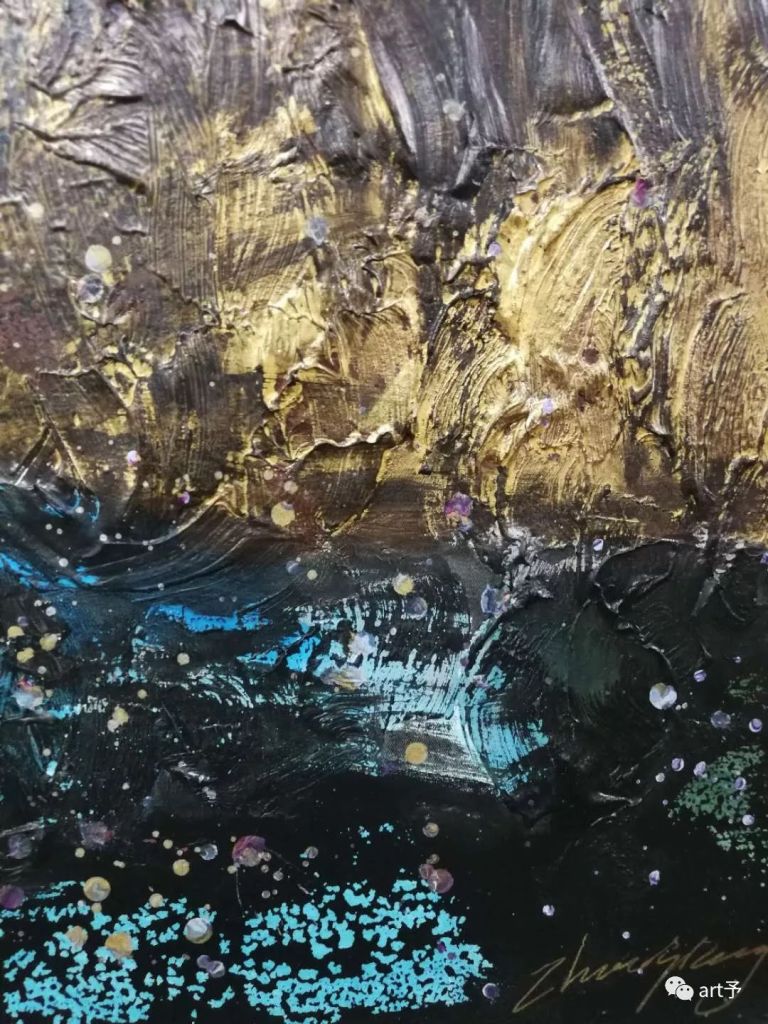
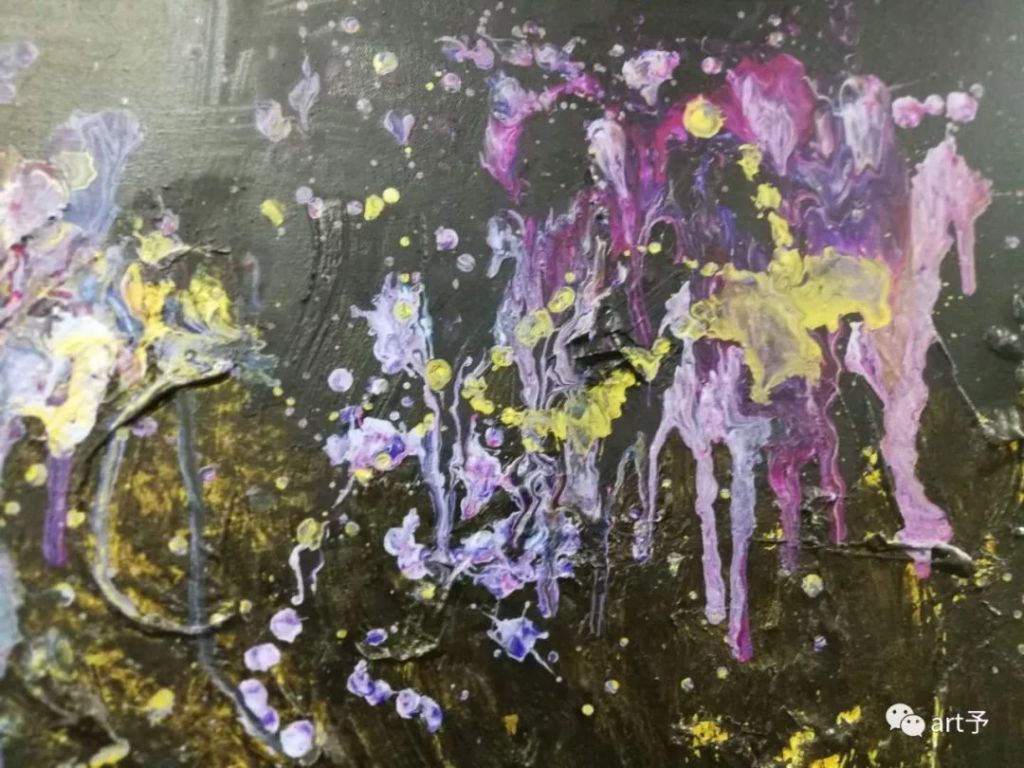
(This is just a small part of the painting.)
SPLASHING FLUID
Because the colors and patterns of the base were somewhat chaotic, when I worked on the fluid part, I also splashed the paint appropriately, using colors that were similar to the base to avoid a sense of disorder in the composition.
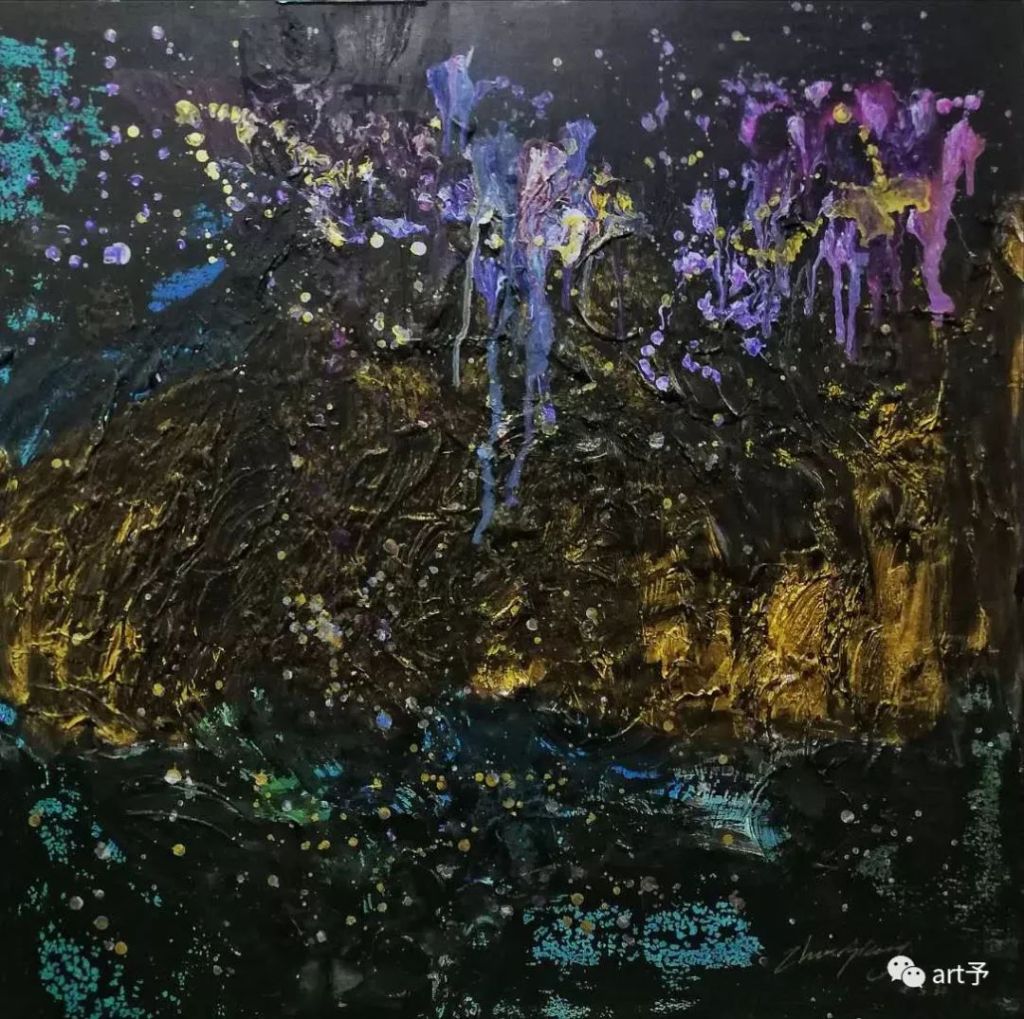
This stage was separated from the previous one by about four days. During this time, I slept in the studio and had a dream. I can’t remember the specifics of the dream, but it was filled with shades of purple and gold. So, I changed the colors I was using for the fluid part from the original white, light gray-blue, lake blue, sienna, yellow, and silver to what you see now: violet, gold, sienna, yellow, and light gray-blue. Although I only changed two colors, the overall tone and sensory experience of the painting became completely different. The initial sense of waves transformed into a sense of a starry galaxy in the later stage. The initial brightness shifted into a sense of mystery.
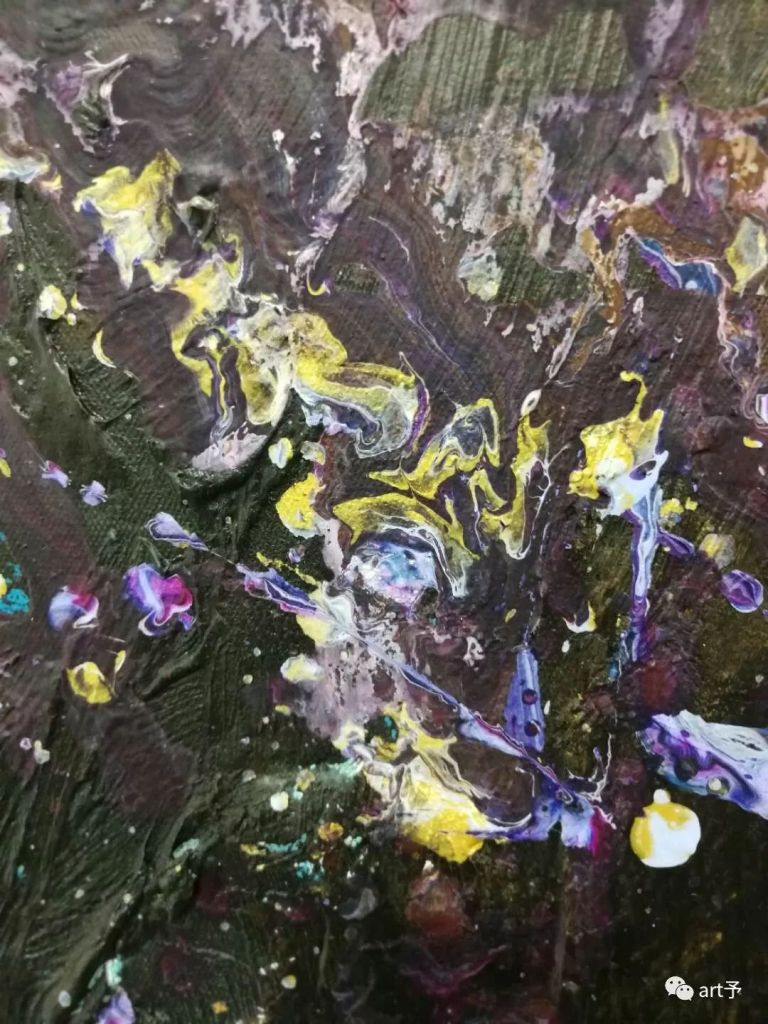
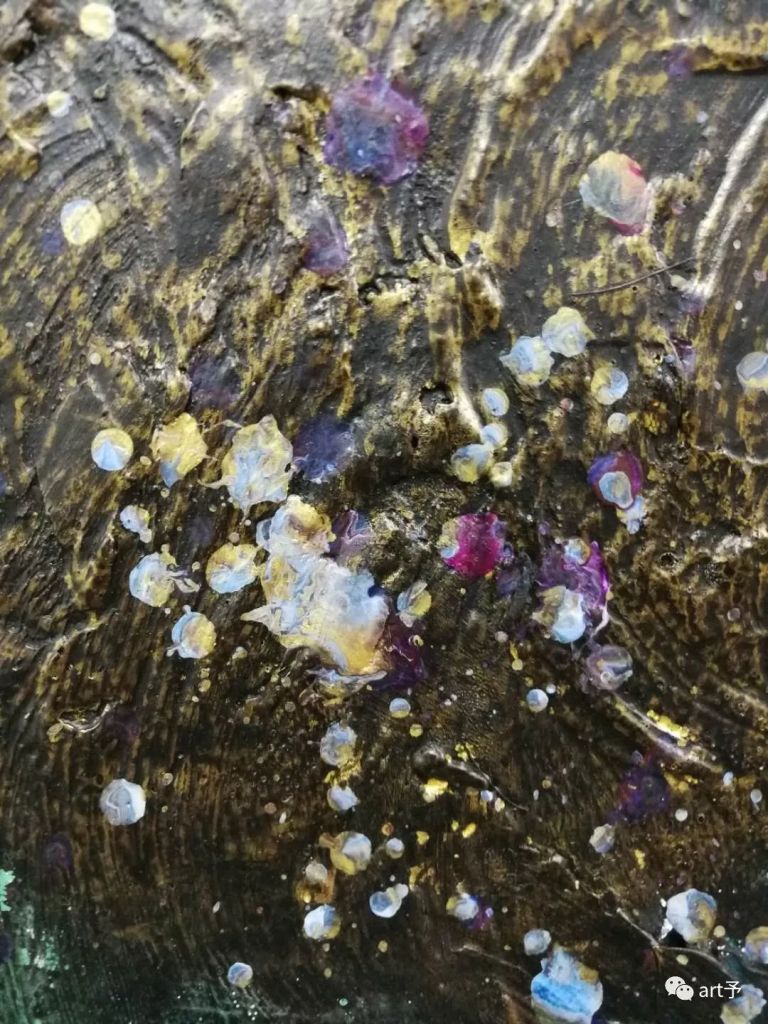
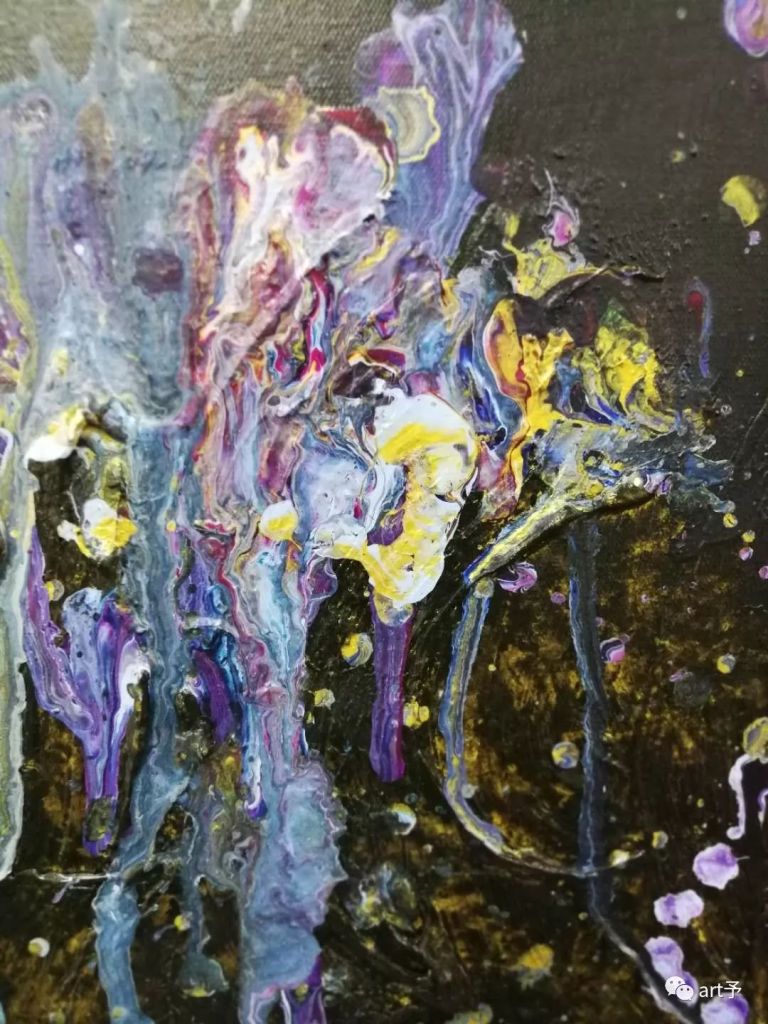
However, because my original intention remained unchanged, the name of the artwork is still “Sea” in the end.
 Jiayi zhao
留下评论